

As the digital economy continues to rapidly evolve, businesses find themselves grappling with the complexities of sales tax compliance. This landscape was intensified by the landmark South Dakota v. Wayfair Inc. decision, which empowered states to levy sales tax on remote sellers. Since then, compliance has been a growing concern for businesses operating across state lines.
The growth of e-commerce has been a double-edged sword for many companies, offering unprecedented reach while simultaneously introducing a patchwork of tax obligations. States have swiftly adapted their tax codes to capitalize on online sales, with more than 40 states now enforcing economic nexus laws. This means that businesses must be vigilant in monitoring their sales and transactions to ensure compliance across multiple jurisdictions.
In practice, this means businesses need robust systems in place to track sales thresholds and nexus requirements. For smaller businesses, or those newly entering the e-commerce space, the administrative burden can be overwhelming. Many are turning to technology solutions and third-party providers for automated compliance systems that can track tax obligations in real time.
Furthermore, businesses must stay updated on constantly changing tax laws. States frequently update sales tax rates or issue new guidance on taxable items, making it imperative for companies to have dedicated resources or partners focused on compliance. Recent updates in tax software have integrated AI-driven tools that provide businesses with real-time alerts and automatic updates to tax codes, ensuring they are always in sync with the latest regulations.
One notable case illustrating the pitfalls of non-compliance is that of a well-known online retailer penalized heavily due to sales tax discrepancies in multiple states. Their lack of an effective compliance system led to significant financial penalties and public scrutiny, underscoring the importance of proactive sales tax management.
Organizations aiming to succeed in the digital marketplace must prioritize sales tax compliance as a critical aspect of their operational strategy. Leveraging technology and staying informed about regulatory changes are key components to navigating this complex environment effectively. For those in the digital commerce sector, ensuring comprehensive compliance could be the difference between success and costly non-compliance scenarios.
Estimated reading time: 1 minute, 50 seconds
Navigating the Complexities of Sales Tax Compliance in a Digital Economy Featured
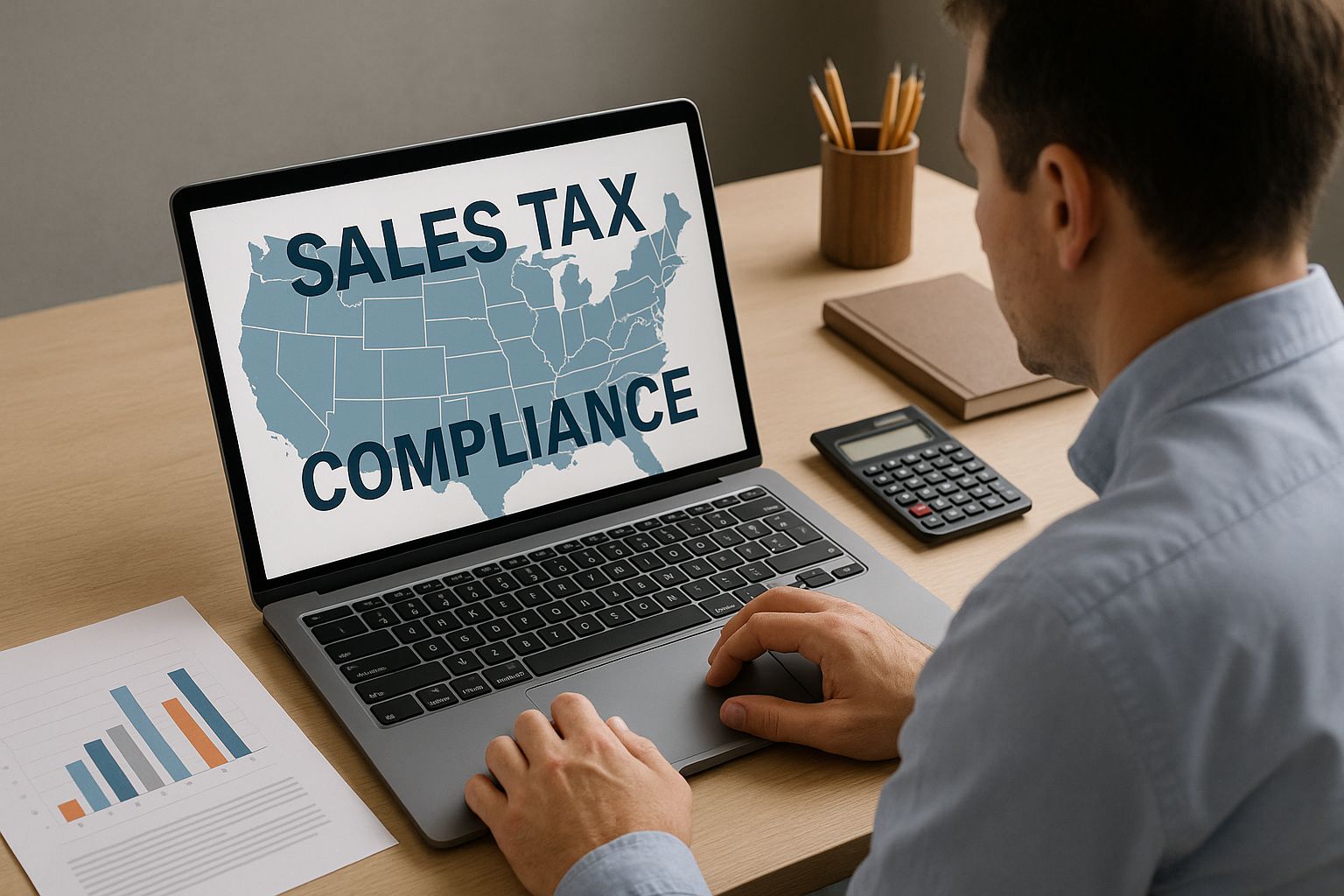 Explore the intricacies of sales tax compliance in the digital economy and learn how businesses can effectively manage obligations across states.
Latest from The Progressive Accountant
- Key Leadership Shifts in Major Accounting Firms: Navigating the Future
- Navigating Leadership Changes: The Impact of New CFOs in Tech Firms
- Leadership Shake-Up Signals New Beginnings for Deloitte USA
- Leadership Transition in Big Four Accounting Firms Marks a New Era
- Navigating the Complexities of Sales Tax Compliance for Digital Goods
Most Read
-

-
Oct 30 2018
-
Written by Craig Gehrig
 Many large companies have already adopted some form of automation…
-
-

-
Dec 16 2019
-
Written by News
Artificial intelligence will be used to complete an unfinished symphony,…
-
-

-
Mar 17 2020
-
Written by Deborah Huyett
“What do you think you’re doing, Dave?” This iconic line…
-
-

-
Jan 08 2019
-
Written by Robert Agar
Industrial robots are not a new phenomena. They have been…
-