


Today’s taxpayers and businesses are facing a continuously evolving landscape of state income tax reforms. Recent reforms have not only sought to address fiscal imbalances but also aim to enhance economic growth potentials. These changes necessitate meticulous attention from accounting professionals, policymakers, and business leaders across industries.
To better illustrate the shifting tax dynamics, one might recall the comprehensive tax overhaul of 2017, which served as a harbinger for subsequent state-level reforms. Inspired by these sweeping federal changes, various states started revamping their tax codes to compete in an increasingly interconnected economy. A standout case is Illinois, which introduced modifications to its corporate tax framework to attract multinational enterprises. The move necessitated businesses to reassess their fiscal strategies to remain compliant and advantageous.
Key to understanding state income tax reforms is the diversity of motivations driving them. With COVID-19 impacting state revenues, many states are compelled to reform their tax policies to replenish fiscal coffers. For instance, states faced with budget shortfalls are increasing tax rates and closing loopholes to secure necessary funds. Conversely, states with a focus on economic rejuvenation have reduced income tax restrictions to spur investment and consumption.
Take North Carolina as an example, which recently announced its intent to gradually eliminate corporate income tax. For CPAs and financial consultants, the ramifications of such reforms are multifactorial. Apart from advising businesses on compliance, they must also guide them in recalibrating tax strategies to harness new opportunities effectively.
In tandem with understanding reforms, businesses also benefit by actively engaging in state-level discussions about tax policies. Collaborative engagement with state legislators allows corporations to advocate for beneficial tax structures that facilitate sustainable economic growth.
As accountants and tax advisors, staying abreast of these developments is critical. According to recent analyses reported on top accounting news platforms, savvy tax professionals are enhancing their value proposition by integrating predictive analytics. This proactive stance prepares businesses for potential fiscal changes, thereby maintaining a strategic edge.
In conclusion, as states continue to experiment with tax reforms, a nimble approach becomes imperative. Businesses and advisors must adopt a dynamic strategy to navigate these changes, ensuring compliance while optimizing fiscal outcomes. As the terrain of state income taxes evolves, so too must the strategies employed by those tasked with managing them.
Estimated reading time: 1 minute, 59 seconds
Navigating the Complex Terrain of State Income Tax Reforms Featured
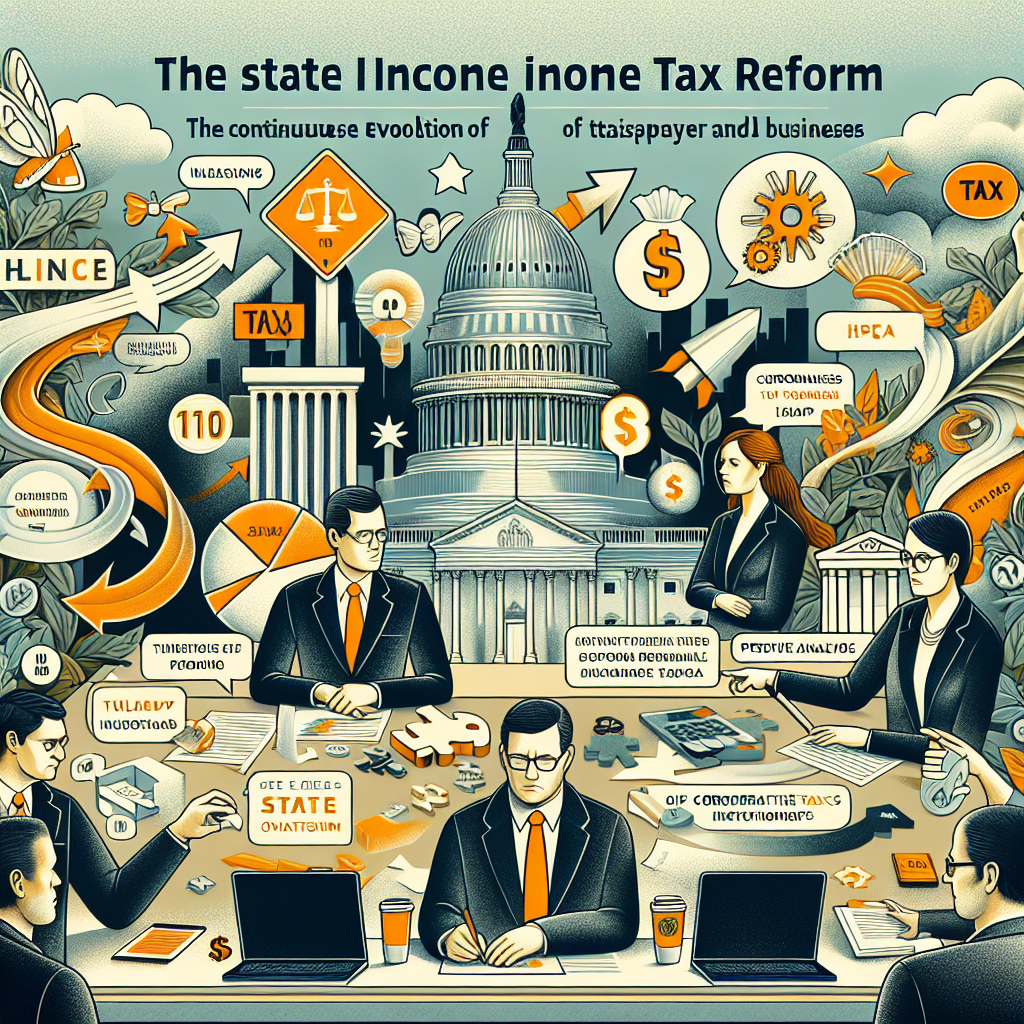 Explore recent state income tax reforms in the US and their implications for businesses and accounting professionals seeking compliance and strategic advantage.
Latest from The Progressive Accountant
- Navigating Firm Management: Understanding the Shift to Remote Operations
- Navigating the Latest Tax Compliance Trends: A Guide for Accountants
- Addressing the Challenges of Remote Tax Consultations
- Emerging Trends in US Corporate Taxation: What You Need to Know
- The Impact of AI on Accounting: Navigating the Future of Finance
Most Read
-

-
Apr 26 2026
-
Written by The Progressive Accountant
Explore recent state income tax reforms in the US and…
-
-
-
Apr 26 2026
-
Written by The Progressive Accountant
Explore how cloud technology is reshaping the accounting industry by…
-
-
-
May 03 2026
-
Written by The Progressive Accountant
Explore the latest changes in sales tax compliance and economic…
-
-
-
Apr 26 2026
-
Written by The Progressive Accountant
Discover how automation is revolutionizing accounting firms by enhancing efficiency…
-